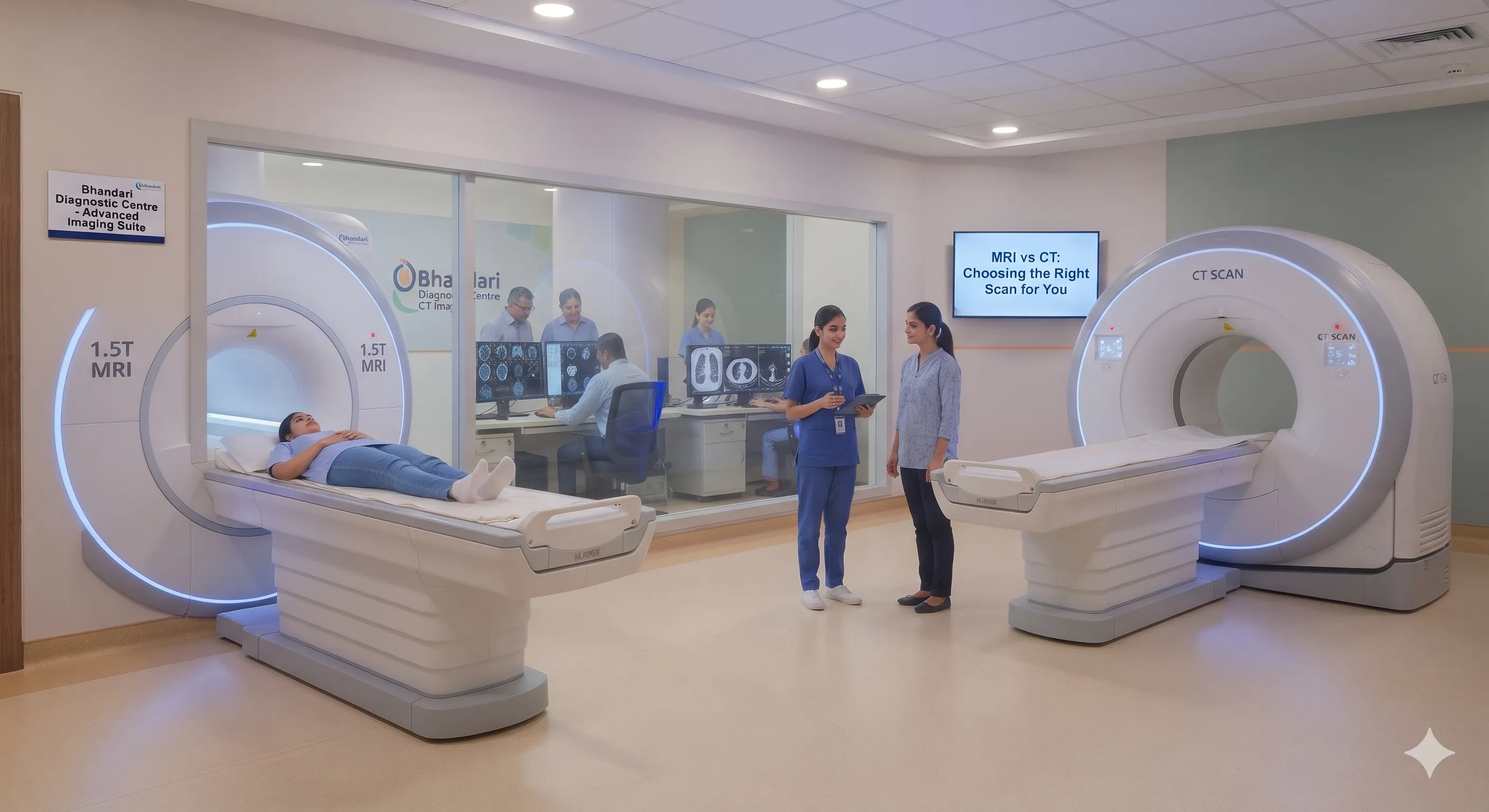
Diagnosis plays a critical role in the process of treatment in medicine. When there is a need to obtain high-quality images of the internal organs, bones, tissues, and vessels of a patient, doctors tend to advise undergoing advanced diagnostic procedures. There are two most popular types of such diagnostics – magnetic resonance imaging (MRI) and computed tomography (CT) scans.
It is necessary to choose the proper MRI center or CT scan center for getting high-quality diagnostic service and a positive experience. Knowing about the way they operate, their diagnostic possibilities and when they should be done will be useful for patients.
What Is an MRI Centre?
MRI Centre is a facility that utilizes Magnetic Resonance Imaging technology for examination purposes. The Magnetic Resonance Imaging works by using the power of magnets and radio waves to generate pictures inside the body without any use of ionizing radiations like X-rays or CT scans.
MRI is recommended by doctors to examine the brain, spinal cord, joint, muscle, ligament and other soft tissues. MRI can be used in diagnosing diseases like spinal disease, sports injuries, nerve disease and some of the internal organ abnormalities.
The MRI center is a facility which utilizes MRI machine to perform the examination following the instructions from the doctor.
What Is a CT Scan Centre?
The CT Scan center is a diagnostic center that utilizes the Computed Tomography imaging technology that enables taking cross-sectional images of the body. The CT Scanner combines the use of X-ray imaging with computers to take images of bones, organs, blood vessels and other internal body parts.
Doctors prefer recommending CT Scans in cases of emergency because they provide images within a short while. CT scans are used by doctors to check on fractures, internal injuries, chest, abdominal problems and tumors.
An efficient CT Scan center adheres to the proper procedures when taking images and ensures radiation safety. The process of scanning is usually fast but depends on the body part to be scanned and the type of scan needed.
MRI vs CT Scan: What Is the Difference?
Although both imaging techniques are used by physicians to analyze body structures, their technology and purposes vary.
1. Imaging Technology
Magnetic Resonance Imaging uses magnets and radio waves in order to produce detailed images, especially of soft tissues. Computerized tomography uses X-rays and computers for creating cross-sectional images of the body.
2. Examination Time
Examinations with MRI are typically more time consuming than examinations with CT. It depends on the region that should be examined and the imaging protocol. Examinations with CT take less time than with MRI.
3. Soft Tissue Imaging
MRI can be helpful for analysis of the brain, spinal cord, muscles, ligaments, joints. CT scans are usually used for examination of bones, fractures, lungs, some internal injuries.
4. Radiation
Magnetic Resonance Imaging does not use any ionizing radiation. In case with CT scans, it is necessary to take into account the requirements of the patient for the examination.
5. Preparations
For Magnetic Resonance Imaging patients might have to remove all metal objects from the body. In CT patients might be asked to follow some additional guidelines.
When Do Doctors Recommend an MRI Scan?
An MRI scan may be recommended when detailed imaging of soft tissues or specific internal structures is required.
Common reasons include:
Brain and neurological conditions: To investigate certain neurological symptoms, brain abnormalities, and spinal cord conditions.
Spinal problems: To assess slipped discs, nerve compression, and other spinal disorders.
Joint and sports injuries: To examine ligament tears, cartilage damage, and muscle injuries.
Internal organ evaluation: To investigate selected abnormalities affecting organs such as the liver and kidneys.
Tumour assessment: To help evaluate certain tumours and understand their location and extent.
The doctor determines whether MRI is appropriate based on the patient's symptoms and medical history.
When Is a CT Scan Recommended?
CT scans are often preferred when rapid imaging or detailed examination of bones and internal structures is needed.
Doctors may recommend a CT scan for:
Accidents and injuries: To assess internal injuries and fractures.
Chest conditions: To examine the lungs and surrounding structures.
Abdominal problems: To investigate certain abdominal conditions and organ abnormalities.
Bone examination: To identify fractures and evaluate complex bone structures.
Emergency diagnosis: To support the rapid assessment of conditions such as head injuries and internal bleeding.
The choice of imaging depends on the clinical situation and the information the doctor needs.
What Should You Consider When Choosing an MRI Centre or CT Scan Centre?
Selecting the right diagnostic facility can make the examination process more comfortable and organised. Consider the following factors before booking an appointment.
Quality of Imaging Equipment
Modern imaging equipment can support detailed examinations. Check whether the facility offers the type of MRI or CT scan prescribed by your doctor.
Qualified Radiology Professionals
Experienced radiologists and trained technicians play an important role in conducting examinations and interpreting diagnostic images.
Patient Safety and Guidelines
A reliable diagnostic centre should follow appropriate safety protocols, including MRI screening procedures and radiation safety practices for CT examinations.
Clear Reports and Communication
Timely reports and clear communication help patients and referring doctors understand the findings and plan the next steps.
Patient Support and Convenience
Appointment availability, preparation guidance, accessibility, and assistance during the examination can contribute to a better patient experience.
How to Prepare for an MRI or CT Scan
Preparations depend on the kind of examinations to be conducted. It is important to adhere to the directions given by the doctor or diagnostic centre.
For MRI, one needs to inform the staff whether one has pacemaker, implants, metallic pieces, any kind of surgery or other kinds of medical instruments. Removal of jewelry and any other metallic object before proceeding to the scanning room is necessary.
For CT scan, one is supposed to inform the medical practitioners of any allergies, pre-existing medical conditions, pregnancy or any possibility of it and medication. If contrast material is required, the diagnostic centre will give particular instructions about fasting and other tests' results.
Conclusion
MRI and CT scans are very important tools of diagnosis that aid the doctors in understanding various medical conditions. Though MRI gives excellent pictures of the soft tissues without ionizing radiation, CT scans produce quick pictures of bones, organs and internal injuries through x-rays.
A dependable MRI centre or CT scan centre should consider the quality of the equipments used, professional experience, patient safety and reporting standards among others. More importantly, patients should undergo imaging examination as recommended by their attending doctor.
Need an MRI or CT Scan in Nashik?
Contact Bhandari Diagnostic Centre for information about MRI, CT scan, appointments, and preparation instructions.
Contact Us