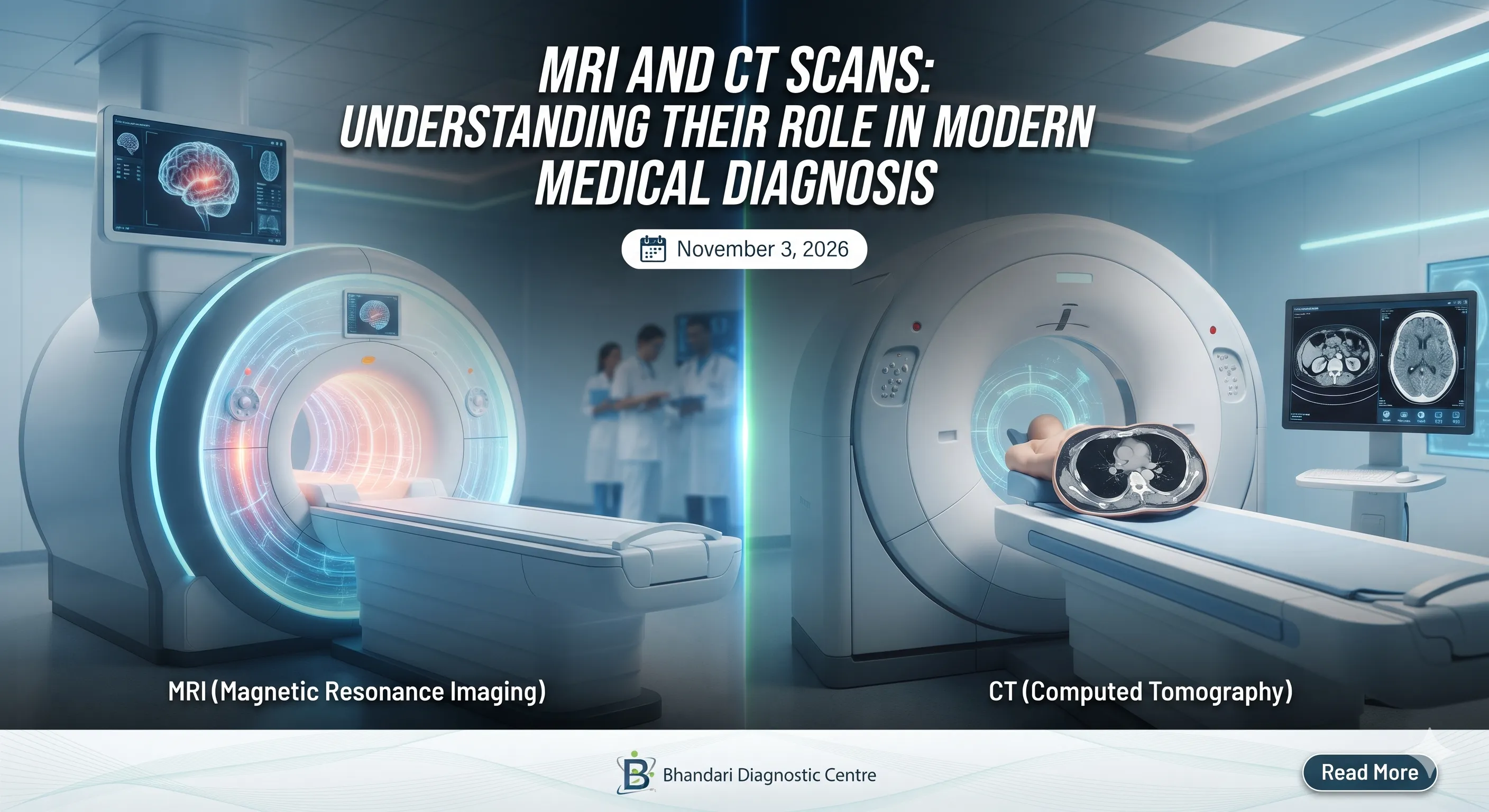
Medical imaging helps doctors to identify conditions so they can provide the best treatment possible. If the symptoms cannot be fully assessed by a physical examination then imaging techniques can provide a more detailed look into the body. MRI and CT scans are both commonly used diagnostic tools.
Below is information on how MRIs and CT scans work, when they may be recommended and how to prepare for your scan to make the diagnostic process easier.
What is an MRI scan?
Magnetic Resonance Imaging (MRI) is a form of imaging which uses powerful magnets and radio waves to create detailed images of the internal structures of the body. Unlike traditional x-rays and CT scans, it does not use ionizing radiation.
MRI scans are often recommended to look at the brain, spinal cord, joints, muscles and soft tissue. They can help investigate neurological conditions, ligament injuries, spinal issues and abnormalities in some organs. They provide detailed images of the soft tissue making them useful if more detail is required from certain structures within the body.
What Is a CT Scan?
Computed Tomography (CT) uses X-rays and computer processing to create detailed cross-sectional images of the body. These images help doctors examine bones, organs, blood vessels, and internal tissues.
CT scans may be recommended to assess fractures, injuries, chest conditions, abdominal concerns, and certain internal abnormalities. They are also useful in situations where quick imaging is required.
Some CT examinations use contrast material to make particular structures more visible. Patients should inform the medical team about allergies, existing conditions, and previous reactions to contrast before the examination.
MRI vs CT Scan: What Is the Difference?
Although both tests help doctors examine internal body structures, they use different technologies and serve different diagnostic purposes.
MRI uses magnetic fields and radio waves and is particularly useful for evaluating many soft tissues, including the brain, spinal cord, and joints. CT uses X-rays and is often preferred for examining bones, certain chest and abdominal conditions, and urgent injuries.
The choice depends on the patient's symptoms, medical history, and the information the doctor needs. Neither examination is universally better than the other. Patients should follow their doctor's recommendation rather than choosing a test independently.
When Should You Consider an MRI or CT Scan?
Doctors may recommend medical imaging when they need additional information to understand symptoms or investigate a suspected condition.
An MRI may be advised for persistent back pain, suspected ligament injuries, neurological symptoms, or certain brain and spinal conditions. A CT scan may be recommended following an injury, when examining possible fractures, or when evaluating certain chest and abdominal problems.
The requirement for a particular scan depends on individual medical circumstances. A qualified doctor determines whether imaging is necessary and which examination is appropriate.
How to Prepare for an MRI or CT Scan
Depending on the type of scan you are having preparation may be required. Before your MRI scan you may be asked to remove any jewellery, watches and other metal items. Please advise the diagnostics team if you have a pacemaker, implant, surgical clips or any metal pieces in your body as this uses a strong magnet.
Some preparation may be required before your CT scan. If you are having a contrast enhanced scan you may be given specific advice about what you can eat/drink and any medication you may need to take. We would also advise you to tell us if you have any allergies or may be pregnant.
You may want to bring any previous medical reports, prescriptions and scans so we can get a better understanding of your history.
Choosing the Right MRI/CT Centre
This is an important part of your scan. You should check that they have the correct equipment, trained staff, good reporting processes and clear appointment instructions.
A good MRI centre will have the right safety checks in place and clear preparation instructions. A goodC T centre will have the right scanning protocols in place and will explain what will happen during your scan.
You can also ask about availability of appointments, how long the scan will take, how you will receive your report and if there are any specific precautions you will need to take.
Diagnostic Imaging Facilities at Bhandari Diagnostic Centre
The Bhandari Diagnostic Centre provides diagnostic imaging for patients requiring various medical investigations. They have various services including 1.5T MRI, 16 slice CT Scanner, Digital Radiology, Ultrasound, Colour Doppler, DEXA and Pathology.
Having a range of diagnostic services can be very useful for patients. You can contact them to find out what investigations they can do, when you will be able to attend, what preparation is needed and how the results will be provided.
Conclusion
MRI and CT Scans are important diagnostic tests which can help doctors with investigating medical issues and providing the right treatment. An MRI is great for providing detailed images of many soft tissue areas whereas a CT is good for looking at bones and many internal body parts. Knowing the differences between them and listening to medical advice can help to give you confidence when having a diagnostic test.
If your Doctor has recommended an MRI or CT scan then the Bhandari Diagnostic Centre provide imaging services in Nashik Road. Contact them to see what investigations they can provide and what appointments they have available.
Need an MRI or CT Scan in Nashik?
Contact Bhandari Diagnostic Centre for information about MRI, CT scan, appointments, and preparation instructions.
Contact Us