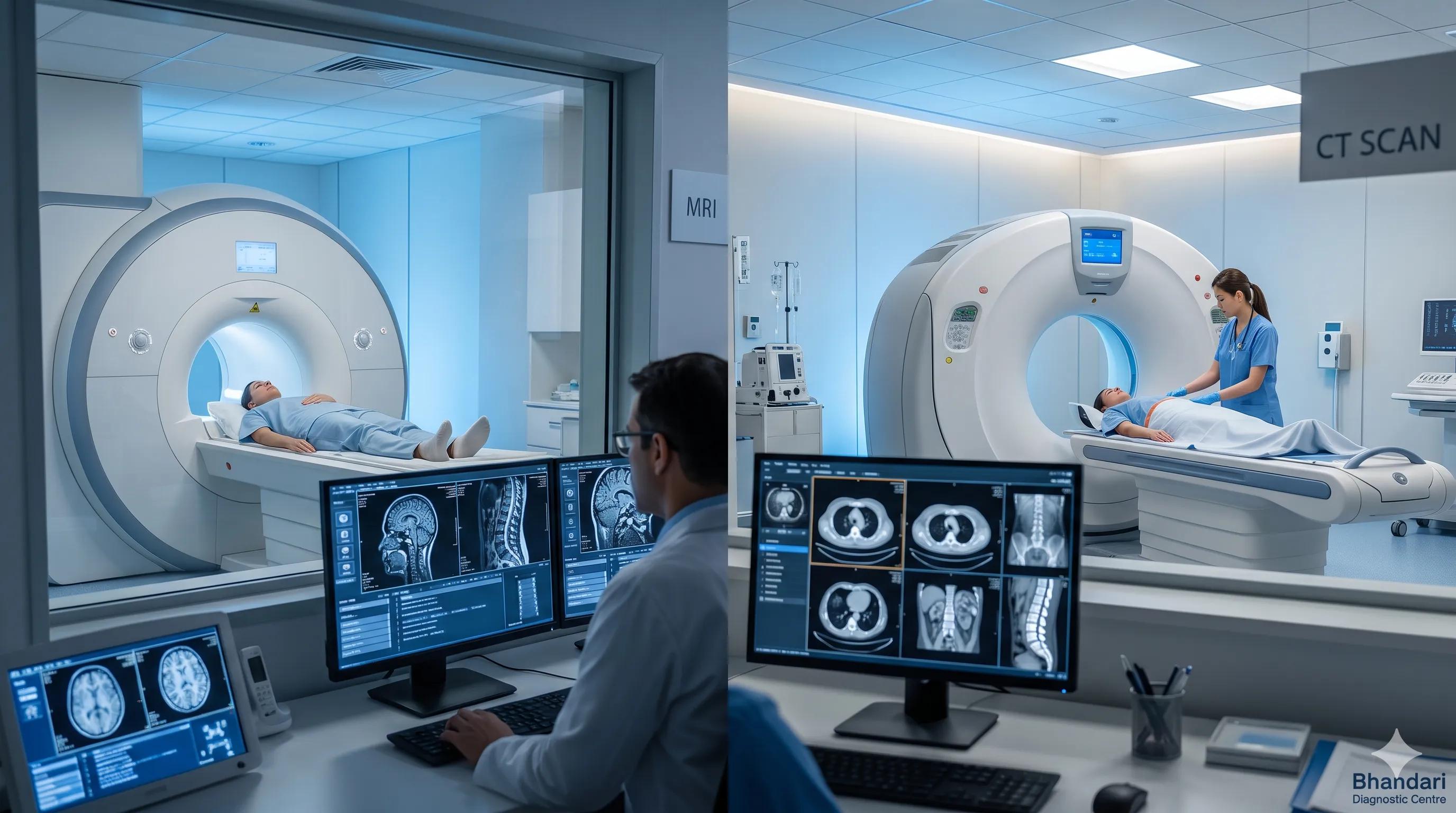
Modern diagnosis requires accurate information about what is going on inside the body. Physical examination and lab testing can give useful information but sometimes detailed imaging of the internal organs, bones, tissues and blood vessels are needed. This can be done using advanced imaging techniques like Magnetic Resonance Imaging (MRI) and Computed Tomography (CT) scans.
Selecting a reliable MRI or CT scan centre in Nasik is an important step in the diagnosis process. Using these imaging techniques allow doctors to investigate symptoms, identify any issues and make informed decisions regarding further treatment.
What is an MRI scan?
Magnetic Resonance Imaging (MRI) is a type of imaging technique which uses strong magnetic fields and radio waves to create detailed images. Unlike traditional X-rays and CT scans, there is no ionising radiation involved.
It is very useful for looking at soft tissue so can be used to diagnose many conditions. An MRI may be recommended by your doctor if they want a more detailed look at your brain, spinal cord, muscles, ligaments, joints or internal organs.
Examples include looking at the brain with an MRI to investigate ongoing headaches, seizures or any suspected neurological conditions. For the spine an MRI can help identify issues with the discs, nerve compression and other issues. Joints can be scanned using MRI to gain detailed information about ligament injuries. Due to the detailed nature of MRIs they can be useful if you doctor needs more detailed information about the issue.
How CT Scans Support Medical Diagnosis
A Computed Tomography (CT) scan uses X-rays and computer technology to create detailed cross-sections of the body.
CT scans are often used when a doctor needs to look at the inside of the body. They can be used to help determine if there is any fractured bones, internal damage, bleeding, infection or abnormalities within various organs.
Depending on what needs to be assessed, you may receive a CT scan to look at your head, chest, abdomen, pelvis or other parts of your body. Sometimes contrast is used during the scan to help assess particular organs, blood vessels or tissue.
CT scans can be very useful in an emergency situation, as they can provide important information about your condition quite quickly. However, if you are receiving a CT scan it should be recommended by a doctor.
MRI vs CT Scan
Whilst both MRI scans and CT scans can produce detailed images of the inside of the body, they work quite differently and have different uses.
An MRI scan uses magnetism and radio waves whereas a CT scan uses x-rays. Generally MRI scans will give a better view of soft tissue such as the brain, spinal cord, muscles and ligaments. CT scans are often preferred to look at bones, certain internal damage and conditions that need to be seen quickly.
Neither test are better than the other. It will depend on your symptoms, what condition you are suspected to have, what part of the body needs looking at and your medical history.
Your doctor will take these into consideration when deciding which scan to recommend.
When Might a Doctor Recommend an MRI or CT Scan?
Imaging tests may be recommended when symptoms require further investigation or when initial examinations do not provide enough information.
An MRI may be suggested for persistent back pain, suspected spinal disorders, neurological symptoms, joint injuries, or certain soft tissue conditions. It may also help doctors monitor specific medical conditions over time.
A CT scan may be recommended following an accident or injury, when examining suspected fractures, or when investigating concerns involving the chest, abdomen, or head.
These scans can support diagnosis, but the results must be interpreted alongside the patient's symptoms, clinical examination, and other relevant investigations.
Preparing for an MRI or CT Scan
Preparation depends on the type of scan and the body part being examined. Patients should follow the instructions provided by the diagnostic centre and their doctor.
Before an MRI, patients may be asked about pacemakers, implants, metal fragments, or other medical devices because the scanner uses a strong magnetic field. Jewellery and other metal objects generally need to be removed before entering the scanning room.
For a CT scan, preparation may involve fasting if contrast is required. Patients may also need to share information about allergies, existing medical conditions, and medications.
It is important to carry previous medical reports and prescriptions when visiting the diagnostic centre. This information can help the medical team understand the reason for the examination.
Choosing the Right MRI Centre and CT Scan Centre
The quality of diagnostic imaging depends on several factors, including the equipment, technical expertise, patient instructions, and reporting process.
When selecting an MRI centre or CT scan centre in Nasik, patients should consider whether the facility offers the required examination and uses appropriate imaging technology. Clear instructions before the procedure and professional support during the scan can also make the experience more comfortable.
Patients should also ask about appointment availability, preparation requirements, report timelines, and whether previous records are needed.
A well-organised diagnostic facility helps patients complete the imaging process with better clarity and understanding.
Diagnostic Imaging Facilities at Bhandari Diagnostic Centre
Bhandari Diagnostic Centre in Nashik provides diagnostic imaging services for patients who require medical investigations recommended by their doctors.
The centre's website lists facilities such as a 1.5T MRI system and a 16-slice CT scan, along with digital X-ray, ultrasonography, Colour Doppler, DEXA, and pathology services.
Patients looking for an MRI centre or CT scan centre can contact Bhandari Diagnostic Centre to confirm the availability of their required examination, appointment timings, preparation instructions, and reporting details.
Carrying previous reports and the doctor's prescription can help the centre guide patients regarding the next steps.
Conclusion
MRI and CT scans play an important role in modern diagnostic imaging. While MRI provides detailed views of soft tissues, CT scans help doctors examine bones, organs, and internal injuries with speed and accuracy. The appropriate test depends on the patient's symptoms and the doctor's assessment.
If your doctor has recommended an imaging investigation, choosing a suitable diagnostic facility is an important step. Bhandari Diagnostic Centre offers MRI, CT scan, and other diagnostic services in Nashik. Contact the centre to enquire about the required examination and understand the preparation process before your appointment.
Need an MRI or CT Scan in Nashik?
Contact Bhandari Diagnostic Centre for information about MRI, CT scan, appointments, and preparation instructions.
Contact Us